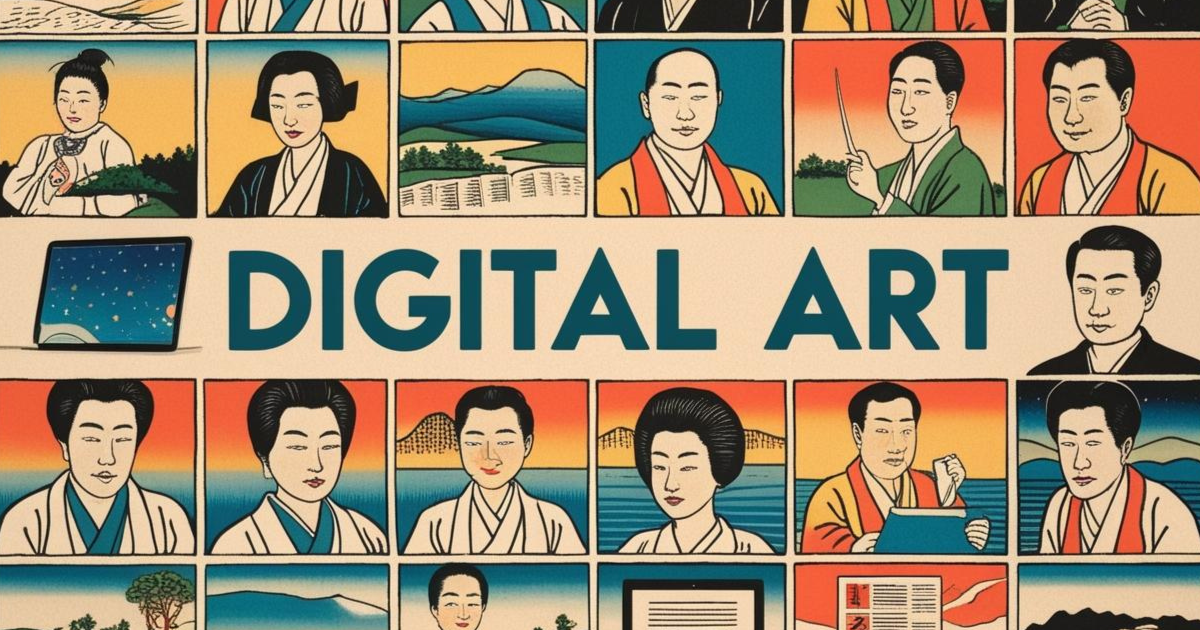
The advent of powerful AI image generators has placed the ability to create stunning visuals into the hands of millions.
A few well-chosen words can conjure entire worlds in seconds.
But a crucial question arises for the discerning creator and collector alike: What separates a fleeting, machine-generated image from a lasting piece of professional art?
At KOSAKI DESIGN ART, our philosophy is clear: the AI’s output is not the final product; it is merely the raw clay.
The true artistry lies in the human touch that follows.
This article peels back the curtain on the transformative process.
We will explore the essential techniques and mindset required to elevate a raw AI Art generation into a refined, intentional work worthy of a gallery wall or a sophisticated digital collection.
The Flaw of the First Draft: Why Curation is Everything
An AI model, trained on vast datasets, produces images based on probability and pattern recognition.
For every masterpiece it generates, it produces a dozen images with strange artifacts, illogical compositions, or six-fingered hands.
The first, and perhaps most critical, act of the artist is not generation, but curation.
It is the disciplined eye to sift through the noise, to identify the single image with the most potential—the one that contains a spark of compelling composition, an intriguing play of light, or an emotional resonance that aligns with the artist’s vision.
The Digital Atelier: A Post-Production Workflow
Once a promising candidate is selected, the real work begins. We enter the digital atelier, where modern software becomes the chisel and brush to shape the AI’s raw output.
This is a process of dialogue with the image, a blend of technical skill and aesthetic intuition.
Step 1: Foundational Restructuring and Composition
Often, an AI-generated image has a strong subject but a weak overall composition.
The first step is to treat the image as a photograph in a darkroom.
We crop, reframe, and sometimes radically recompose the piece.
Does it adhere to the rule of thirds? Does it lead the viewer’s eye on a deliberate journey?
We might use tools like Photoshop’s Content-Aware Fill to remove distracting elements or extend the canvas, establishing a balanced and harmonious foundation.
Step 2: The Art of Color Grading and Palette Harmonization
An AI’s color palette can be beautiful but emotionally incoherent.
Color grading is where the artist imposes an intentional mood.
At our studio, we often draw from traditional Japanese Color Palettes, infusing the work with a specific cultural sensibility—be it the serene wabi-sabi tones of moss and stone, or the vibrant colors of a Kabuki theater.
This involves meticulous adjustment of hues, saturation, and luminance to ensure every color serves the overall narrative of the piece.
Step 3: Sculpting with Light and Shadow (Chiaroscuro)
Lighting is the soul of an image.
While AI can generate impressive lighting, it often lacks subtlety and direction.
The artist must become a digital lighting director.
Using techniques like dodging and burning, we enhance the play of light and shadow (chiaroscuro) to create depth, define forms, and guide the viewer’s focus.
This process transforms a flat image into a three-dimensional world.
Step 4: Infusing Texture and Human Imperfection
Raw AI images often have a synthetic, overly smooth quality.
The final step in achieving a professional look is the introduction of texture and subtle imperfections.
We might overlay textures from real-world materials like handmade washi paper, aged wood, or natural linen.
We meticulously paint in fine details, sharpen key areas to mimic focus, and add a delicate grain.
It is these subtle, tactile qualities that trick the eye and give the work a tangible, human-made feel.
Conclusion: The Artist as the Final Algorithm
Generative Art is a powerful collaborator, a bionic extension of our creative will.
But it is not the artist.
It provides the spark, but the human creator must fan it into a flame.
The process of transforming a machine’s output into professional art is an intimate dance between technological potential and artistic intent.
It is the careful curation, the thoughtful composition, the masterful control of color and light, and the infusion of texture that elevates an image from a novelty into a timeless piece.
It is a testament to the fact that the most important algorithm is, and always will be, the artist’s own vision.